
UK and Poland Deepen Strategic Defence Partnership Amid Rising Hybrid Threats Across Europe
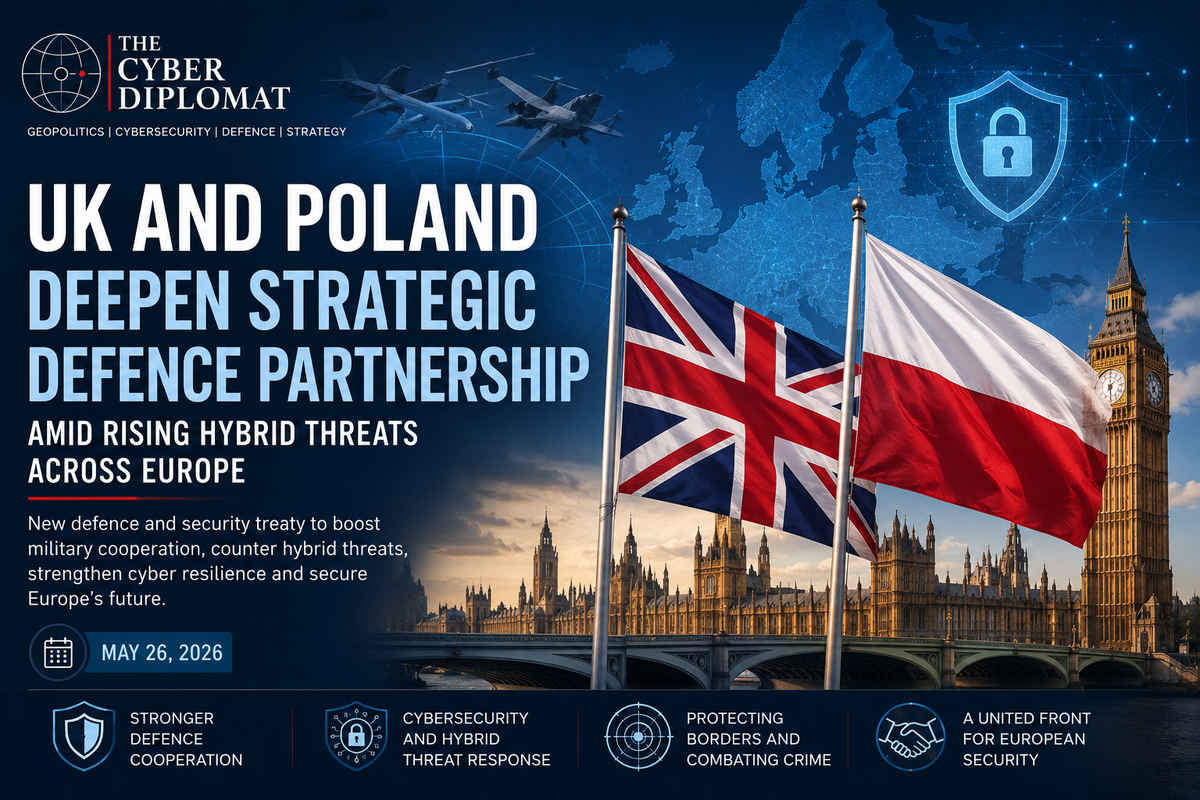
The United Kingdom and Poland are set to formalize a major new defence and security treaty aimed at strengthening Europe’s resilience against evolving hybrid threats, deepening military interoperability, and enhancing collective security cooperation across NATO’s eastern flank.
The agreement, expected to be signed in London during Polish Prime Minister Donald Tusk’s visit hosted by UK Prime Minister Keir Starmer, marks one of the most significant advancements in UK–Poland defence relations in recent decades.
Strengthening Europe’s Security Architecture
The treaty comes at a time of increasing geopolitical uncertainty across Europe, particularly amid persistent concerns over Russian hybrid warfare activities, cyber operations, disinformation campaigns, and attacks targeting critical infrastructure.
Both leaders are expected to discuss the growing pace of hostile activities across Europe, including cyber intrusions, sabotage attempts, espionage operations, and malign influence campaigns that have increasingly blurred the lines between conventional conflict and grey-zone warfare.
The agreement reflects a broader strategic trend within Europe toward reinforcing regional defence cooperation, improving resilience against non-traditional threats, and strengthening coordination between NATO allies.
Prime Minister Keir Starmer described the treaty as a major step forward in bilateral security cooperation, emphasizing the importance of closer European partnerships in addressing emerging security challenges.
Focus on Advanced Defence Capabilities
A key component of the treaty is expected to focus on defence industrial cooperation and the development of next-generation military capabilities.
The UK and Poland are anticipated to expand collaboration on:
- Advanced air and missile defence systems
- Co-development of medium-range air defence missiles
- Next-generation defence manufacturing
- Uncrewed and autonomous systems
- Counter-drone warfare technologies
- Electronic warfare capabilities
- Joint military exercises and interoperability initiatives
The agreement is also expected to support sovereign defence production chains and enhance industrial resilience across both countries while contributing to NATO’s broader deterrence posture.
Cybersecurity and Hybrid Threat Cooperation
Beyond conventional defence cooperation, cybersecurity and hybrid threat mitigation are expected to form a central pillar of the treaty.
Both nations are likely to increase intelligence sharing, coordinated cyber defence exercises, and collaborative efforts to counter hostile state-sponsored cyber operations and disinformation campaigns.
The move reflects growing recognition across Europe that cyber resilience and protection of critical infrastructure are now fundamental components of national security strategy.
Recent years have seen heightened concern over attacks targeting transportation networks, energy infrastructure, government systems, telecommunications, and logistics sectors throughout Europe.
Border Security and Organised Crime
The agreement is also expected to include a Joint Action Plan on irregular migration and transnational organised crime.
As a frontline state within Europe’s migration system, Poland plays a key role in regional border security coordination. The UK and Poland are expected to enhance intelligence cooperation aimed at disrupting human smuggling networks, strengthening surveillance capabilities, and countering criminal exploitation of digital platforms.
A Broader European Strategic Shift
The treaty aligns with the UK government’s broader effort to strengthen defence and security engagement with European partners following recent agreements with France and Germany.
For both London and Warsaw, the partnership reflects a shared recognition that Europe’s evolving threat landscape requires deeper coordination across defence, cybersecurity, intelligence, and critical infrastructure protection.
As hybrid warfare tactics continue to evolve, agreements such as this demonstrate how European allies are increasingly integrating military readiness with cyber resilience, technological innovation, and strategic cooperation to safeguard regional stability.